
Wood Fence Installation in Jacksonville, FL
A wood fence can create privacy, define a yard, support practical gate access, and give a property a natural or modern finished look. EcoJax installs residential wood fencing and complete wood fence replacements for Jacksonville-area properties, with the layout planned around the yard instead of forcing one generic configuration onto every site.
If you are still comparing materials, start with our Jacksonville fence installation overview. If you already know you want wood, this page goes deeper into styles, privacy, gates, property conditions, replacement, maintenance, and local planning considerations.
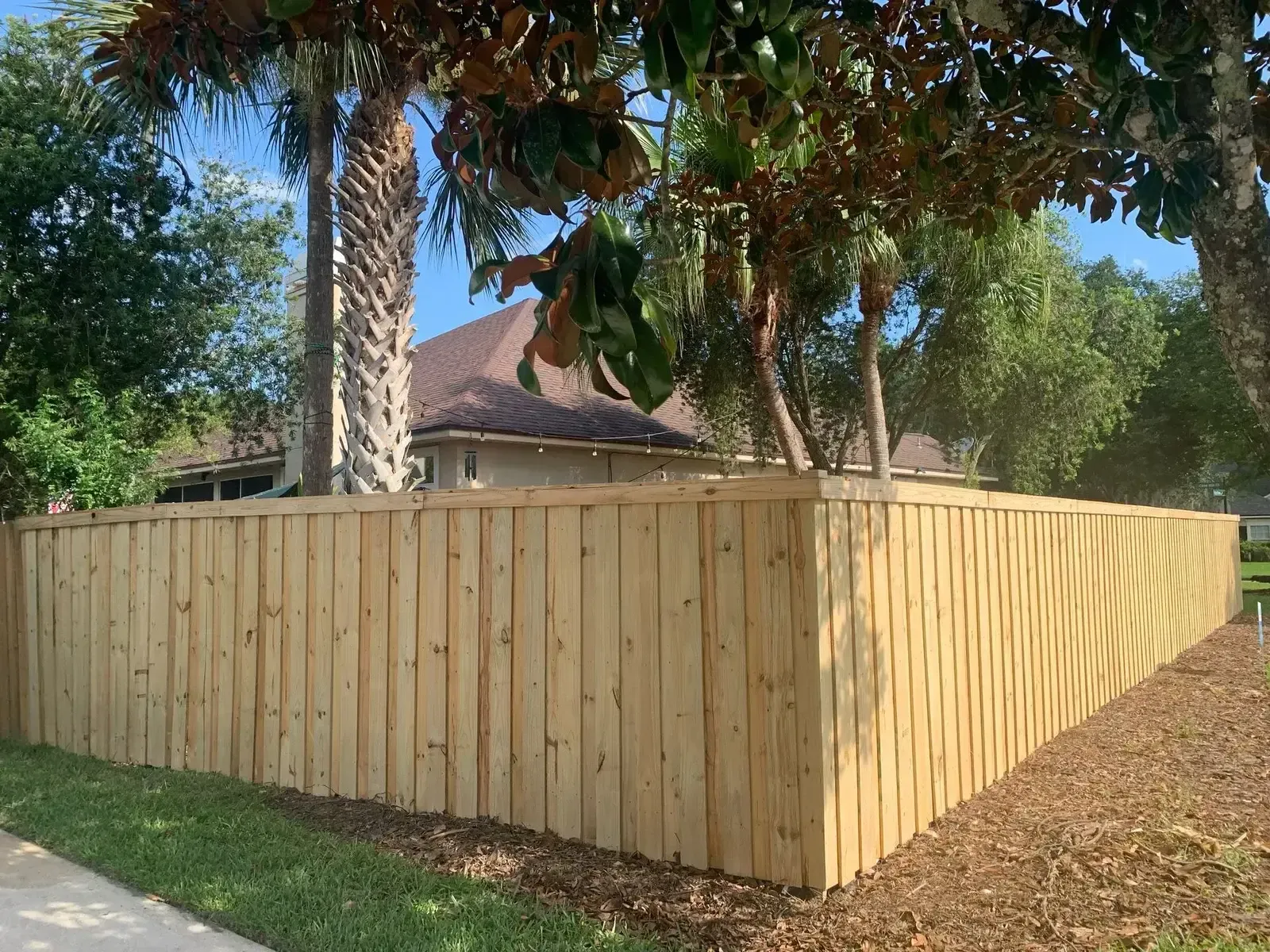
What Is Wood Fence Installation?
Wood fence installation is the process of planning the fence line, choosing a wood style and height, setting the structural posts, building the fence sections and gates, and completing the project around the actual property conditions. A good installation plan also accounts for access, grade changes, existing structures, old-fence removal, property-line information, and any permit or HOA requirements that apply to the site.
Wood is especially flexible because the fence can be built in traditional vertical privacy styles, shadowbox configurations, dog-ear profiles, horizontal layouts, and other property-specific designs. That flexibility is useful, but it also means the details should be defined before construction begins.
Why Homeowners Choose Wood Fencing
Wood remains a practical choice when the priorities are privacy, a natural appearance, design flexibility, and the ability to build around gates, corners, slopes, landscaping, and other property features. It can fit traditional homes, newer construction, and contemporary designs depending on the board layout and finish.
Wood remains a practical choice when the priorities are privacy, a natural appearance, design flexibility, and the ability to build around gates, corners, slopes, landscaping, and other property features. It can fit traditional homes, newer construction, and contemporary designs depending on the board layout and finish.
Privacy
Solid vertical-board layouts can provide strong visual screening for backyards, patios, side yards, and neighboring property lines.
Design flexibility
Wood can be built in vertical, dog-ear, shadowbox, horizontal, capped, and other layouts instead of limiting the project to one manufactured panel style.
Gate integration
Walk gates and wider access openings can be planned as part of the fence instead of treated as an afterthought.
Property-specific construction
Wood can be adapted around grade changes, narrow side yards, landscaping, screened enclosures, and other fixed conditions.
Natural appearance
Unfinished or properly finished wood can complement landscaping and a wide range of home exteriors.
Maintenance tradeoff
Wood usually requires more long-term care than vinyl, so the appearance and flexibility should be weighed against staining, weathering, and maintenance expectations.
Wood Fence Styles to Consider
The best style is not simply the one that looks best in a photo. It should match how much privacy you want, how the fence will look from both sides, the property layout, maintenance expectations, and any neighborhood or HOA requirements.
Traditional Vertical Privacy Fence
A vertical privacy fence uses closely spaced boards to create a strong visual barrier. It is a common choice for backyards, side yards, pet areas, and outdoor living spaces where screening is the priority.
Dog-Ear Wood Fence
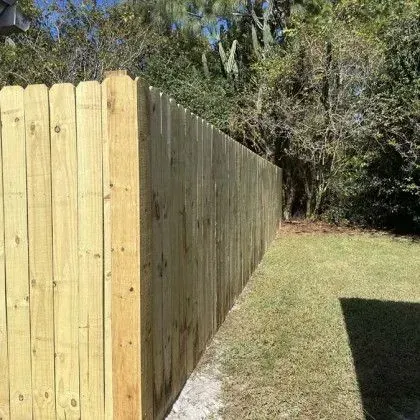
Dog-ear boards have clipped upper corners that create a familiar residential fence profile. The look is straightforward and works well when the goal is traditional privacy without a decorative top cap.
Shadowbox Wood Fence
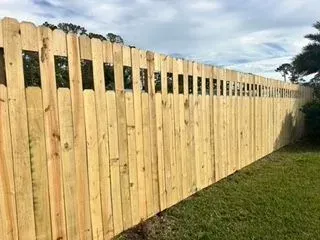
A shadowbox layout alternates boards on opposite sides of the rails. It creates a more dimensional appearance and allows more airflow than a fully solid privacy layout, although it does not provide the same uninterrupted visual screening as a solid board fence.
Horizontal Wood Fence
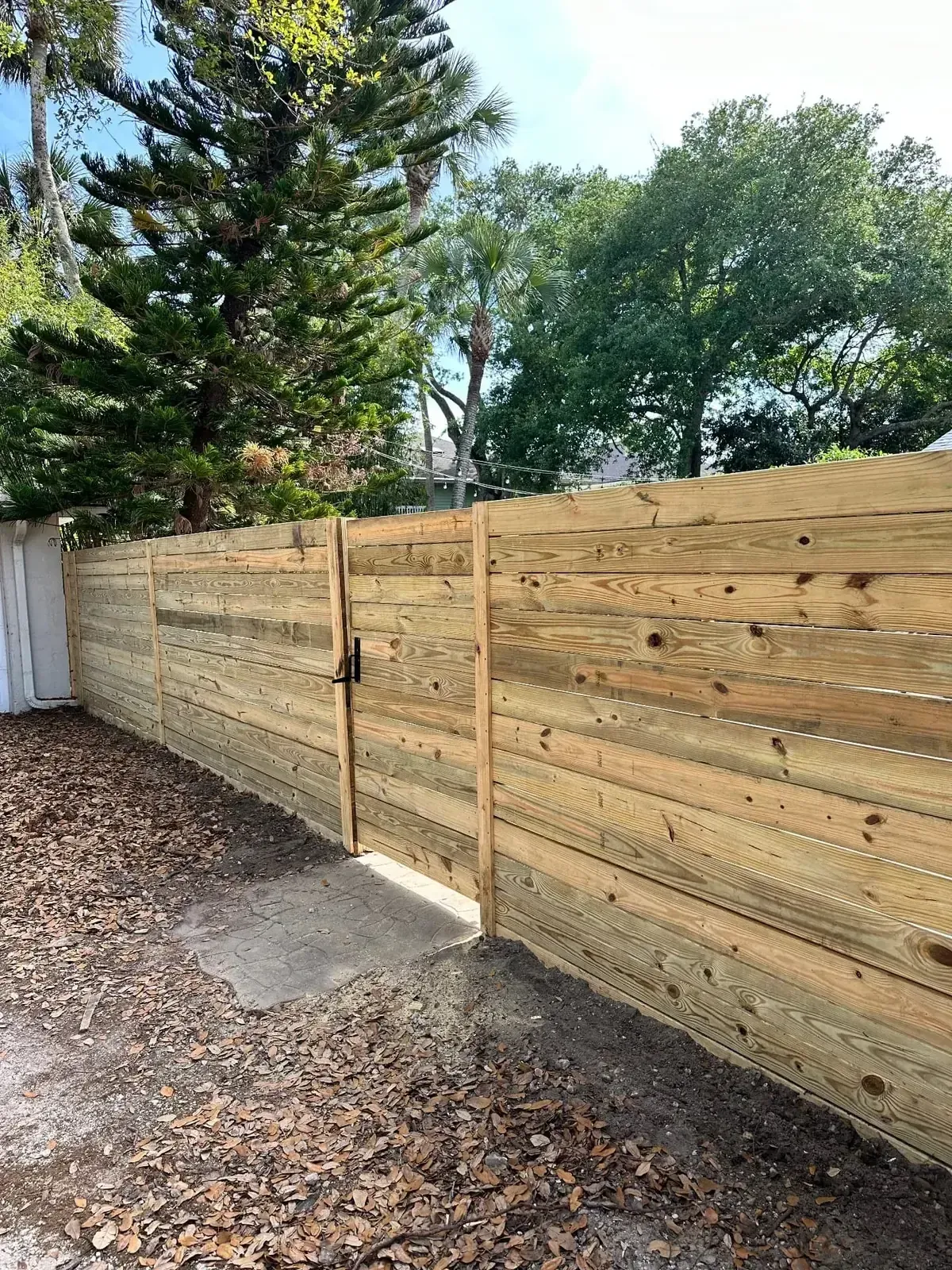
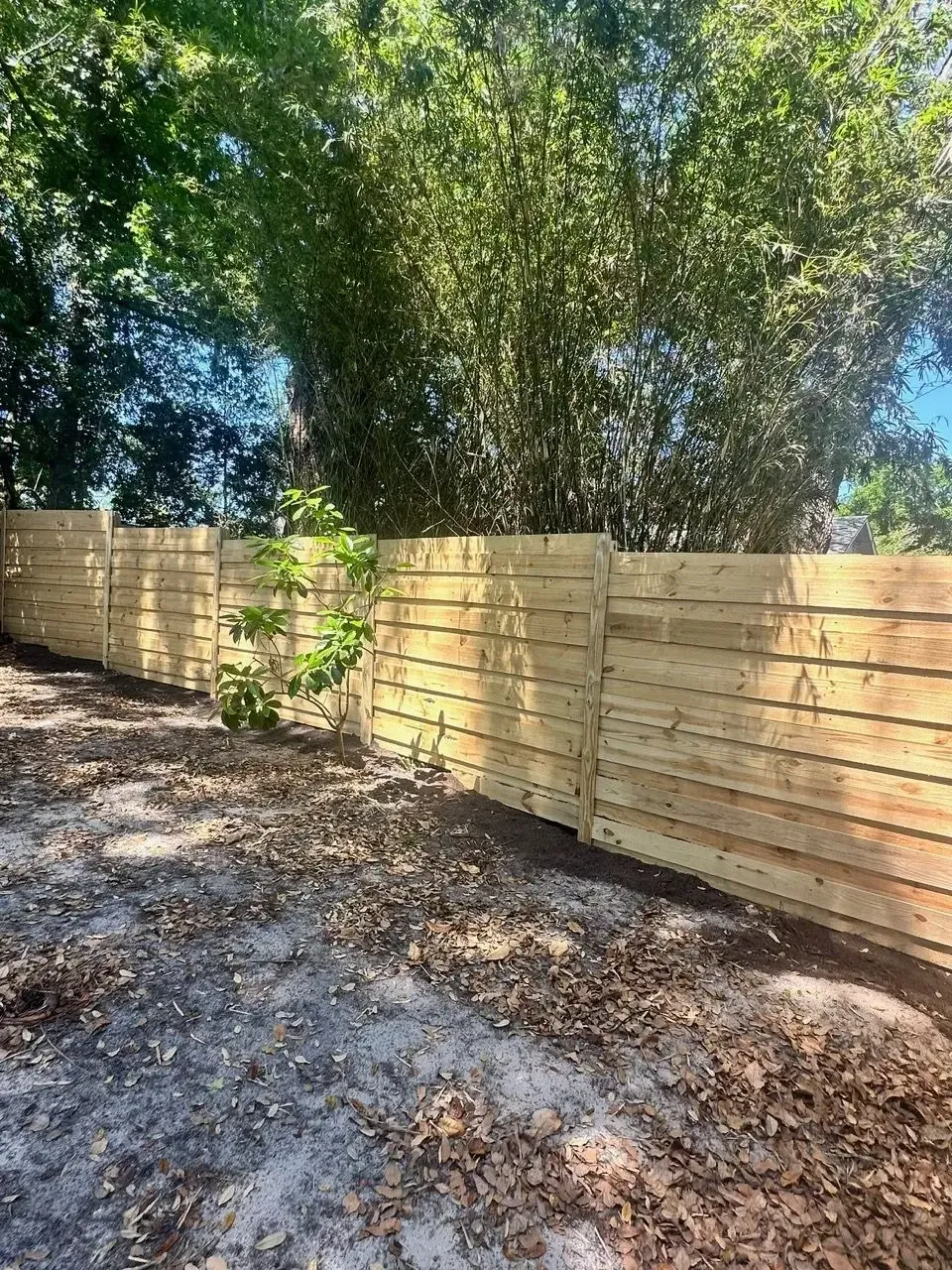
Horizontal boards create a more contemporary look and can work especially well when the fence is intended to become a strong design feature. Board alignment, post spacing, transitions, grade and gate construction all matter to the finished appearance. For unusual layouts or design-driven projects, see our custom fence construction service.
Wood Privacy Fence Installation
A wood privacy fence is designed to reduce direct views into or out of the yard while creating a defined property boundary. The amount of screening depends on the board layout, spacing, fence height, grade, and how the fence transitions around gates and structures.
Before choosing a privacy layout, decide what you actually want to screen. A backyard that needs separation from a neighboring patio may require a different approach from a side yard that mainly needs pet containment or a gate near the driveway. A privacy fence should solve the specific sightline and access problem instead of simply surrounding the property with the same configuration everywhere.
Plan the Gates at the Same Time as the Fence
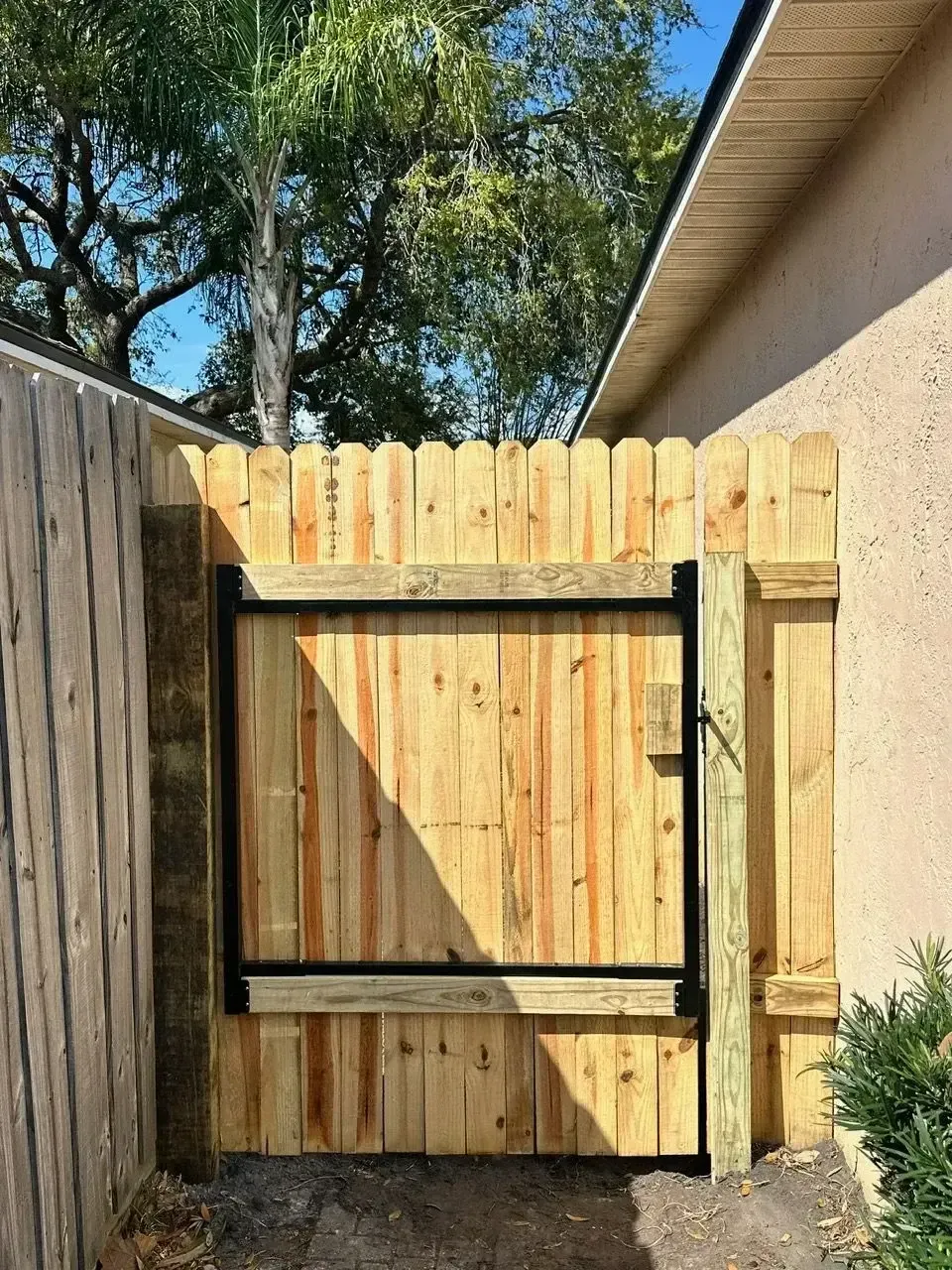
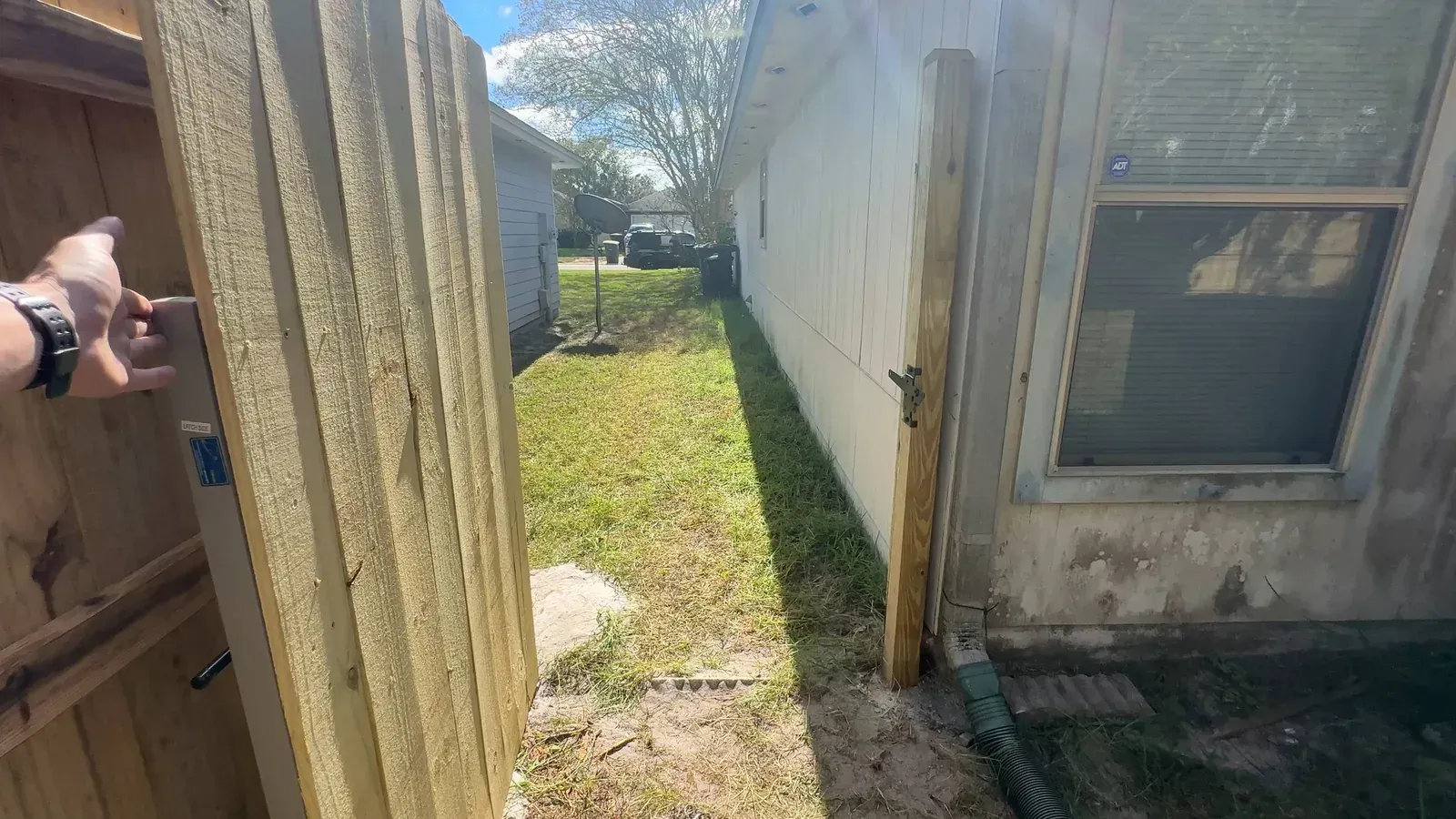
Gate design affects how the fence functions every day. A walk gate for routine use, a wider opening for a mower, and access for pool or landscaping equipment have different width, swing, hardware, and clearance requirements. Gate locations should be identified during planning so posts, grade, nearby structures, and travel paths can be handled intentionally.
EcoJax project photography includes wood gates built on steel frames as part of documented replacement work. The important point is not that every gate needs the same frame; it is that the gate should be engineered and scoped for how it will actually be used.
Wood Fencing for Slopes, Side Yards and Existing Structures
The fence line rarely exists in a perfect open rectangle. Grade changes, narrow side yards, trees, landscaping, driveways, screened enclosures, walls and other structures can all change how the fence should be laid out and built.
On a sloped yard, the visual transition should be decided before installation. In a tight side yard, gate swing and usable passage width matter. Where the fence meets a house, wall or screened enclosure, the connection and termination point should be part of the written scope. These are the kinds of property-specific decisions covered in more detail on our custom fence construction page.
New Wood Fence Installation vs. Complete Replacement
A new installation starts with a new fence line or a property that does not currently have the required fence. A complete replacement adds another decision: whether the new fence should repeat the old layout or correct problems that already exist.
When an old fence is being removed, it is worth reviewing gate locations, access widths, privacy needs, awkward transitions and the way the yard is used today. EcoJax can include removal and complete replacement in qualifying projects. The company is not positioning this service around small repair-only calls; the focus is new installation and full replacement projects.
How the Wood Fence Installation Process Works
Start with the property and the goal
Discuss the fence line, privacy, pets, access, appearance, replacement needs, and any known HOA or property constraints.
Review the layout and measurements
Walk the proposed line and review grade, gates, side-yard access, existing fencing, nearby structures, landscaping, and areas where the fence changes direction or function.
Define the style and written scope
Confirm the wood style, approximate footage, height, gate count and locations, removal if applicable, access considerations, cleanup, and responsibilities for permits or HOA documentation.
Handle applicable approvals
Requirements vary by jurisdiction and property. Confirm what is needed before construction rather than assuming every Jacksonville-area property follows the same rules.
Install the fence and gates
Set the structural components, build the fence and gates to the agreed layout, and address planned transitions around the property.
Clean up and complete the walkthrough
Review the finished line, gate operation, cleanup, and any project-specific details identified during planning.
How the Wood Fence Installation Process Works
Start with the property and the goal
Discuss the fence line, privacy, pets, access, appearance, replacement needs, and any known HOA or property constraints.
Review the layout and measurements
Walk the proposed line and review grade, gates, side-yard access, existing fencing, nearby structures, landscaping, and areas where the fence changes direction or function.
Define the style and written scope
Confirm the wood style, approximate footage, height, gate count and locations, removal if applicable, access considerations, cleanup, and responsibilities for permits or HOA documentation.
Handle applicable approvals
Requirements vary by jurisdiction and property. Confirm what is needed before construction rather than assuming every Jacksonville-area property follows the same rules.
Install the fence and gates
Set the structural components, build the fence and gates to the agreed layout, and address planned transitions around the property.
Clean up and complete the walkthrough
Review the finished line, gate operation, cleanup, and any project-specific details identified during planning.
Wood Fencing in Jacksonville's Climate
Jacksonville-area wood fencing is exposed to strong sun, humidity, frequent rain, irrigation, vegetation, and seasonal weather. Those conditions make installation details and long-term maintenance more important than they would be in a dry climate.
Homeowners should keep soil, mulch and dense vegetation from constantly trapping moisture against the lower boards where practical, monitor gates and hardware as the fence ages, and plan an appropriate finishing or staining schedule for the wood being used. If staining is part of the plan, do not assume newly installed pressure-treated wood should be stained immediately; drying time varies. Follow the material manufacturer and contractor guidance for the specific project.
EcoJax also provides
wood staining. Treat staining as a maintenance decision that should match the wood condition and project timing rather than an automatic day-one step.
Permits, Property Lines and HOA Rules
Fence rules are local. A property described casually as "Jacksonville" may fall under the City of Jacksonville, Jacksonville Beach, an unincorporated area, St. Johns County, or an HOA with additional architectural requirements. Confirm the actual jurisdiction before relying on a generic fence rule.
- City of Jacksonville: the city zoning FAQ says the property line should be established by survey rather than assumed from a curb or sidewalk. It currently allows up to 4 feet within the front-yard setback and up to 8 feet farther toward the rear, subject to zoning, corner-lot visibility rules and exceptions. See the City of Jacksonville zoning FAQ.
- Jacksonville Beach: the city publishes a specific fence permit application and states that installing or replacing a fence on private property requires a permit. See the Jacksonville Beach permitting information.
- St. Johns County / Palm Valley area: the county states that residential fences are generally limited to 6 feet, with a 4-foot limit within the front 25 feet of the property line, and notes that additional rules apply in the Ponte Vedra and other special districts. See St. Johns County Planning and Zoning.
- HOAs: an association may impose requirements for height, material, color, style, finished side, gate design, placement, and submittal documents in addition to municipal or county rules.
EcoJax can assist with applicable permitting and HOA submission requirements for qualifying fence projects, but final approval belongs to the governing jurisdiction or association.
Real EcoJax Wood Fence Project: Atlantic Beach Replacement
EcoJax project records document a June 22, 2026 Atlantic Beach project involving removal of a deteriorated existing fence and approximately 450 linear feet of new wood fencing with multiple gates. The recorded project was completed in three days.
That job is useful as evidence that EcoJax has completed a large wood replacement with gates; it is not a promise that another project of similar size will follow the same schedule. Site conditions, material availability, approvals, weather, access, gate count and scope can all change the timeline.
The media library includes verified images from this project, including W-002, W-005 and W-012. Those images should be the page's primary "project proof" assets because their location and project association are documented.
What Does Wood Fence Installation Cost?
There is no responsible flat price for a wood fence without measuring the job and defining the scope. The useful number is a project-specific quote based on the actual property.
- total linear footage and fence height
- wood style and finish details
- number, width and construction of gates
- existing-fence removal and haul-away
- grade changes and difficult transitions
- site access and working space
- permit, HOA or survey requirements when applicable
- cleanup and other agreed scope items
When comparing quotes, compare the written scope as closely as the price. Two estimates can look similar while including very different gate construction, removal, cleanup, materials, or approval responsibilities.
Wood Fence or Vinyl Fence?
Choose wood when natural appearance and design flexibility are high priorities and you are comfortable with ongoing maintenance. Choose vinyl when you prefer a manufactured privacy system with lower routine finishing requirements. Neither material is automatically right for every property.
Use our
fence options page for a broader material comparison, or start with the
Jacksonville fence installation overview if you have not selected a material yet.
Why Choose EcoJax for a Wood Fence Project?
- More than 10 years of exterior home-improvement experience.
- Licensed and insured project team, as represented on EcoJax.net.
- Wood, vinyl and aluminum fence experience, with wood-specific customer feedback and project photography.
- Custom-built wood options, including traditional privacy and horizontal designs.
- New installation, gates, old-fence removal and complete replacement can be included in qualifying projects.
- Real first-party fence imagery and documented project examples instead of relying only on stock photos.
- Free on-site estimates are available for qualifying fence projects.
"I went with the wood fence. Quality custom work, friendly and professional service from start to clean up." - Tara B., EcoJax customer
Wood Fence Installation FAQs
How much does wood fence installation cost in Jacksonville?
The cost depends on measured footage, height, style, gates, demolition, grade, access, material details and approval requirements. A property-specific written quote is more useful than a generic per-foot number.
What wood fence styles can EcoJax install?
EcoJax project evidence supports traditional wood privacy fencing, horizontal wood designs, gates and property-specific configurations. The media library also shows dog-ear and shadowbox examples that can be used as style references. Final availability and project specifications should be confirmed during the consultation.
Is wood fencing a good choice for Jacksonville weather?
Wood can work well in Jacksonville, but it should be selected with the maintenance tradeoff in mind. Sun, humidity, rain, irrigation, vegetation and ground-level moisture can affect wood over time, so installation details and ongoing care matter.
Can EcoJax install a wood privacy fence?
Yes. Wood privacy fencing is part of EcoJax's documented fence work and is appropriate when the goal is stronger visual screening around a yard or outdoor living area.
Can a wood fence follow a sloped yard?
Yes. Wood fencing can be stepped or otherwise planned around a changing grade. The exact approach depends on the slope, desired appearance, gate locations and surrounding property conditions.
Can EcoJax remove an old fence before installing the new one?
Yes. Complete removal and replacement can be included in qualifying projects. Replacement is also a good time to reconsider old gate locations, access problems or awkward fence transitions instead of automatically rebuilding the previous layout.
Does a new wood fence need to be stained immediately?
Not necessarily. Newly installed pressure-treated wood may need time to dry before staining. The correct timing depends on the wood, moisture condition, product requirements and project conditions. Follow the manufacturer and contractor guidance for the specific fence.
Do I need a permit for a wood fence?
It depends on the actual jurisdiction and property. Jacksonville, Jacksonville Beach and St. Johns County do not use one identical set of fence rules, and HOA requirements may apply in addition to local rules.
It depends on the actual jurisdiction and property. Jacksonville, Jacksonville Beach and St. Johns County do not use one identical set of fence rules, and HOA requirements may apply in addition to local rules.
There is no universal timeline. Footage, demolition, gates, access, approvals, weather, material availability and site complexity all affect scheduling. EcoJax can provide a project-specific expectation after reviewing the property.
Is wood or vinyl better for privacy?
Both can provide strong privacy. Wood offers more design flexibility and a natural appearance but generally requires more ongoing maintenance. Vinyl offers a consistent manufactured system with lower routine finishing requirements. The better choice depends on the property, appearance goals, maintenance preference and budget.
A good wood fence plan should answer the practical questions before posts are set: Where should the fence run? What needs to be screened? Which gates need to be used every day? What existing conditions affect the line? What rules apply to the property?
EcoJax can review the property, discuss the wood-fence options that fit the job, and prepare a project-specific scope.