
Residential Fence Installation in Jacksonville, FL
A residential fence should do more than mark the edge of a yard. It should solve the reason you are installing it in the first place - privacy, safer space for children or pets, controlled access, a cleaner property line, a better view, or a more finished outdoor space. EcoJax installs wood, vinyl and aluminum residential fencing for Jacksonville-area homeowners, including new fence installation, gates, and qualifying complete fence replacement projects.
Not sure which material or configuration fits your property? Start by comparing EcoJax fence options, then use this page to understand how a residential fence project is planned and installed.
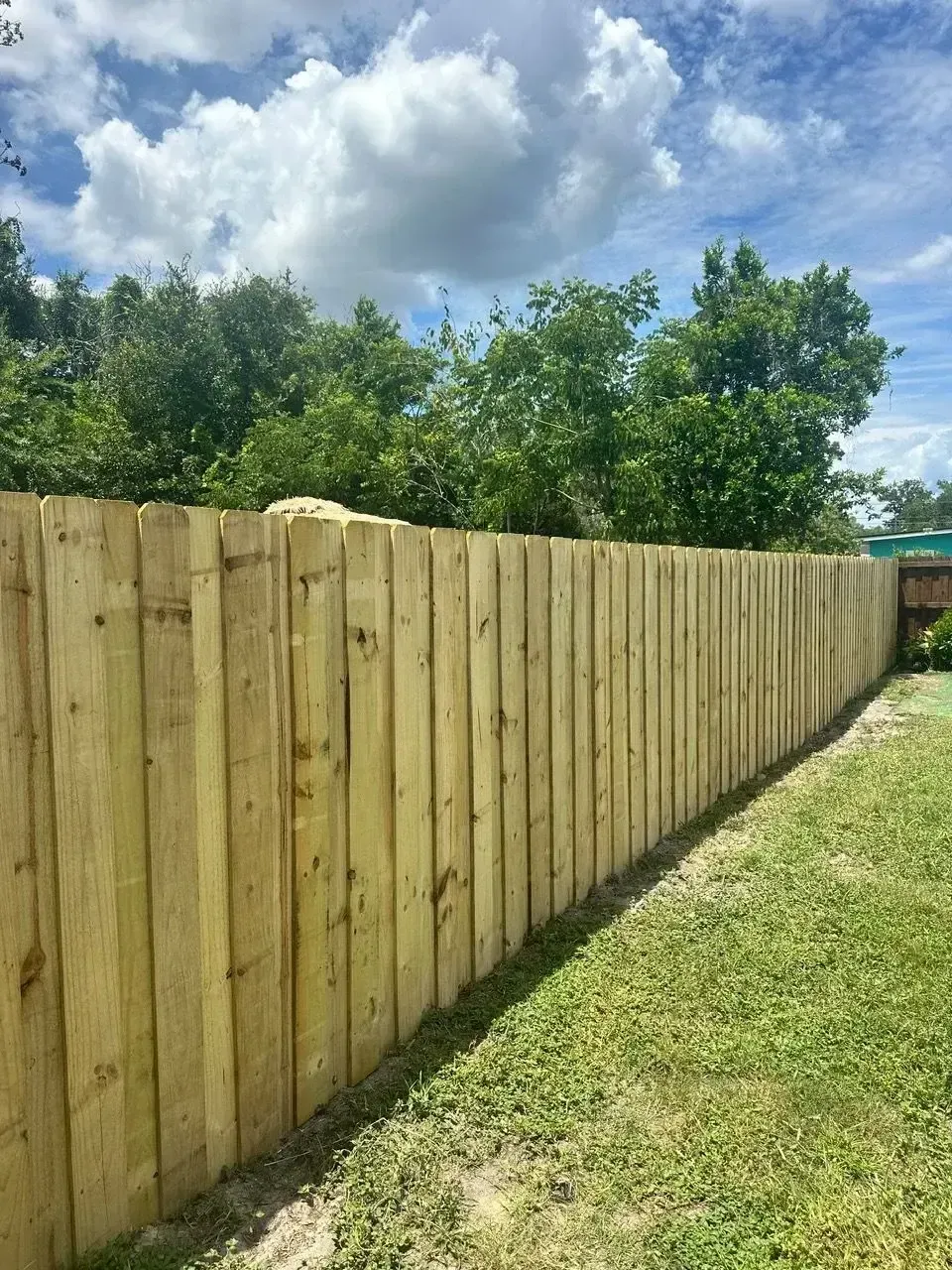
Start With How You Need the Fence to Work
The best residential fence for one property may be a poor fit for another. Before choosing a style, identify the job the fence needs to do. A homeowner who wants full backyard privacy has different priorities from someone who wants to keep a pond view open, create a secure side-yard gate, contain a dog, or make room for lawn equipment to move through the property.
A useful fence plan considers the whole property: where the fence should begin and end, the grade of the yard, nearby structures, gate locations, access width, existing fencing, property boundaries, and any HOA or local requirements that apply. Solving those questions before installation usually leads to a cleaner scope and fewer surprises during the project.
Choose the Right Residential Fence Material
EcoJax installs wood, vinyl and aluminum fencing. None is universally “best.” The right choice depends on the amount of privacy you want, the look of the home, routine maintenance preferences, the property layout, and how the yard is used.
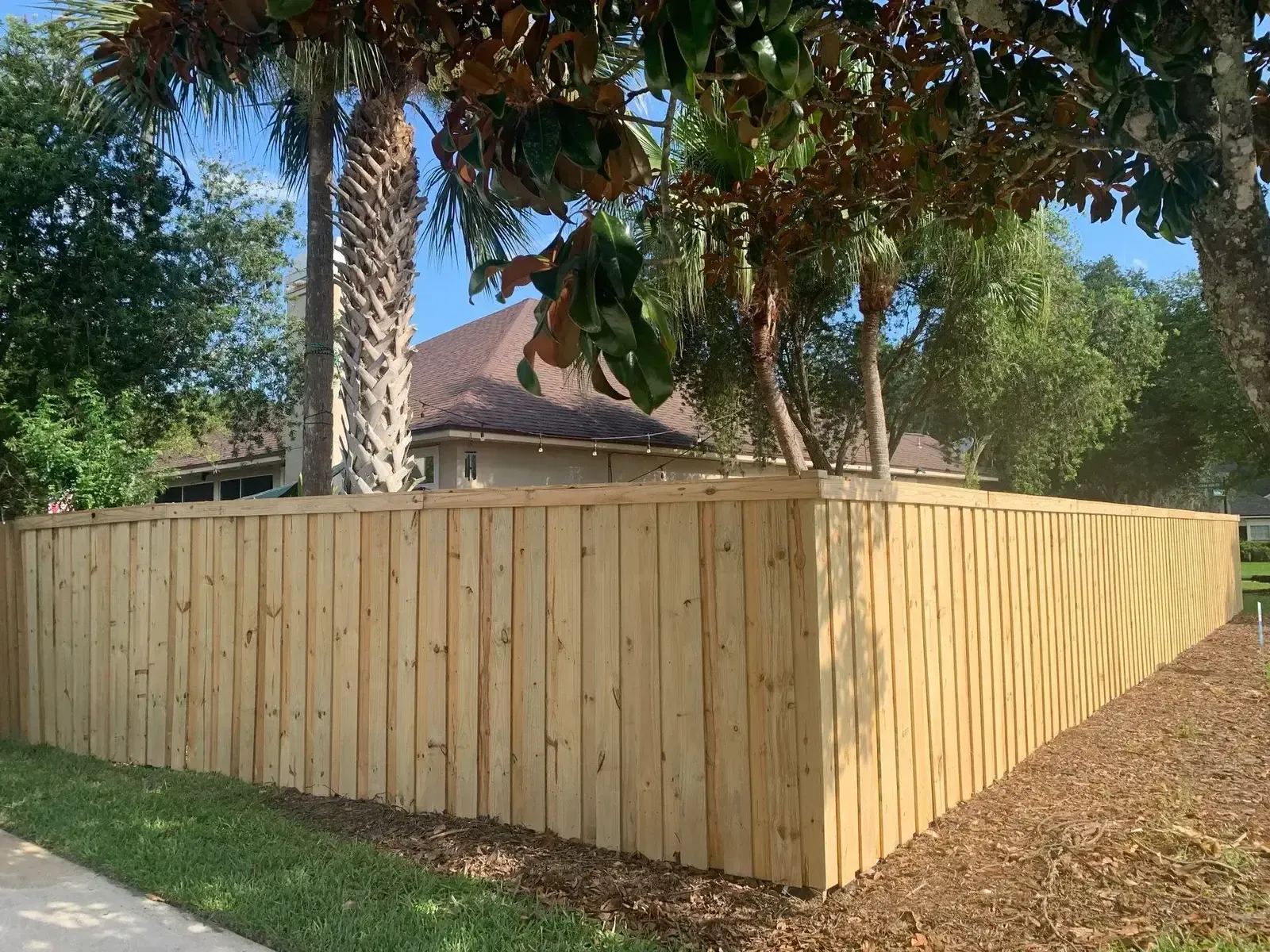
Wood fencing: privacy and design flexibility
Wood is a strong fit when privacy, a traditional appearance, and the ability to adapt the fence to the property are priorities. It can work well for backyard privacy, side yards, stepped or sloped layouts, and custom gate configurations. Wood also gives homeowners more control over the finished appearance, but it does require ongoing exterior care over time.
If you already have or are planning a wood fence, EcoJax also offers wood staining as a separate exterior service. Timing and product selection should be matched to the condition of the wood and the project scope.
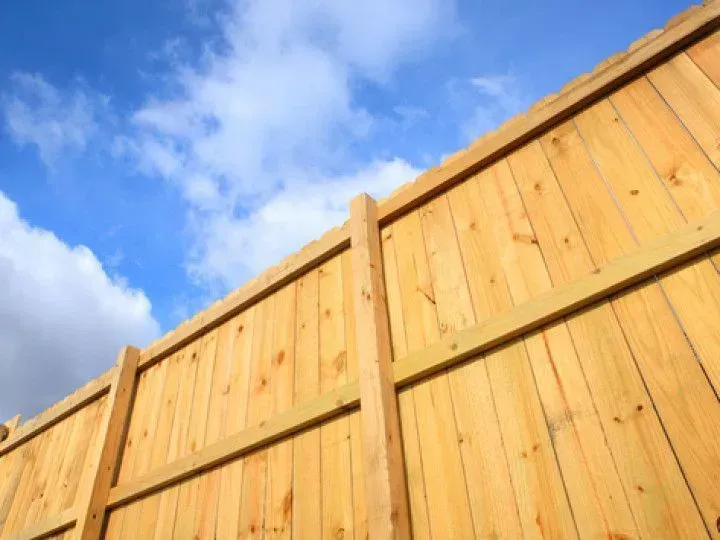
Vinyl fencing: consistent privacy with less routine finishing
Vinyl fencing is often considered by homeowners who want a clean, consistent privacy barrier without the staining or painting associated with wood. It can be especially useful for backyard privacy and side-yard enclosures. Layout, gate placement and site conditions still matter; the material does not eliminate the need for careful planning.
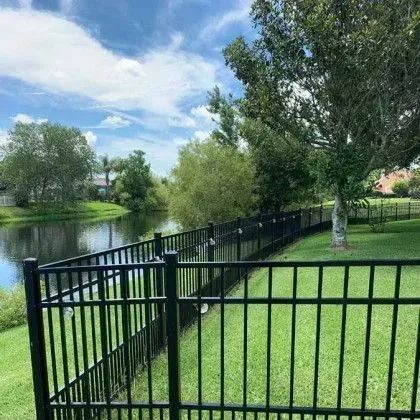
Aluminum fencing: enclosure without blocking the view
Aluminum fencing is useful when a homeowner wants a defined boundary or enclosure while keeping the yard visually open. It can be a good fit around landscape features, open backyards and properties where preserving sightlines matters more than creating a solid privacy wall. Site-specific safety and code requirements still need to be checked for uses such as pool barriers.
Quick material comparison
| Material | Common fit | Privacy | Routine finish upkeep | Routine finish upkeep |
|---|---|---|---|---|
| Wood | Privacy, custom appearance, adaptable layouts | High with solid designs | Higher than vinyl/aluminum because exterior wood needs ongoing care | Useful where the layout, style or gate configuration benefits from customization |
| Vinyl | Clean privacy enclosures and consistent appearance | High with privacy panels | Lower routine finishing needs | Gate width, grade and post layout still need to be planned correctly |
| Aluminum | Open-view enclosure and defined boundaries | Low | Generally low routine finish upkeep | Best when visibility is a feature, not a problem |
What Professional Residential Fence Installation Includes
Professional fence installation is not simply setting posts and attaching panels. A well-defined project starts with the property and the intended use of the fence, then works through layout, materials, gates, site conditions, approvals, installation and cleanup.
Property layout and boundaries
The sidewalk, curb, existing fence or mowing line should not be assumed to be the legal property line. Where the boundary matters, a current survey is the reliable starting point. The fence also needs to be positioned around structures, easements, access points and any setback or visibility requirements that apply to the property.
Grade and site conditions
Sloped ground, drainage patterns, tree roots, narrow side yards, existing hardscape and limited equipment access can all change the way a fence is laid out and installed. Those conditions should be identified before the final scope is set.
Custom layouts when the property needs more planning
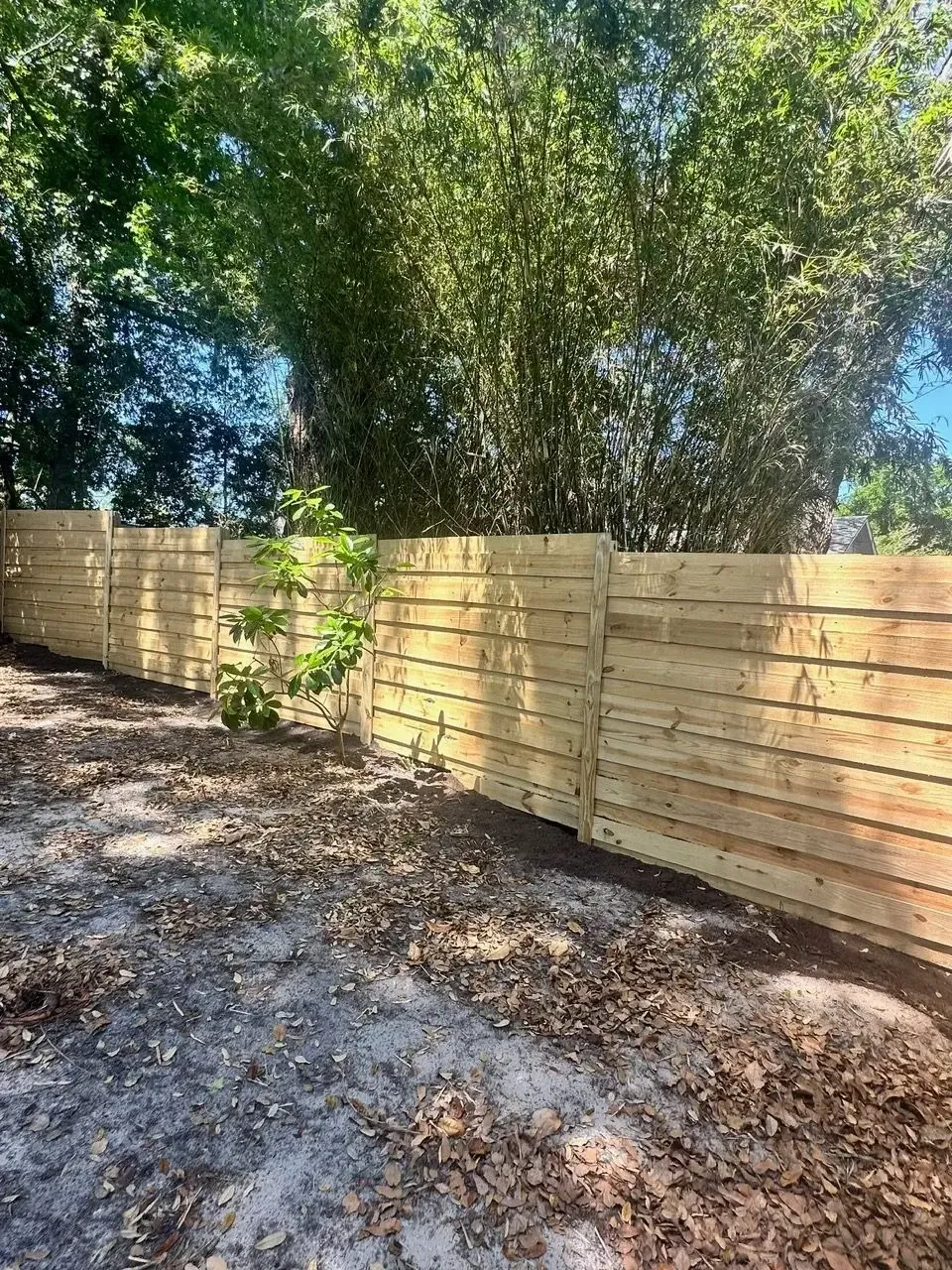
Some properties need more than a standard straight-run layout. If your project involves slopes, unusual transitions, multiple gates, tight clearances or a more property-specific design, review EcoJax Custom Fence Construction for a deeper look at those conditions.
Wood fence stepped to follow the slope of a Jacksonville yard
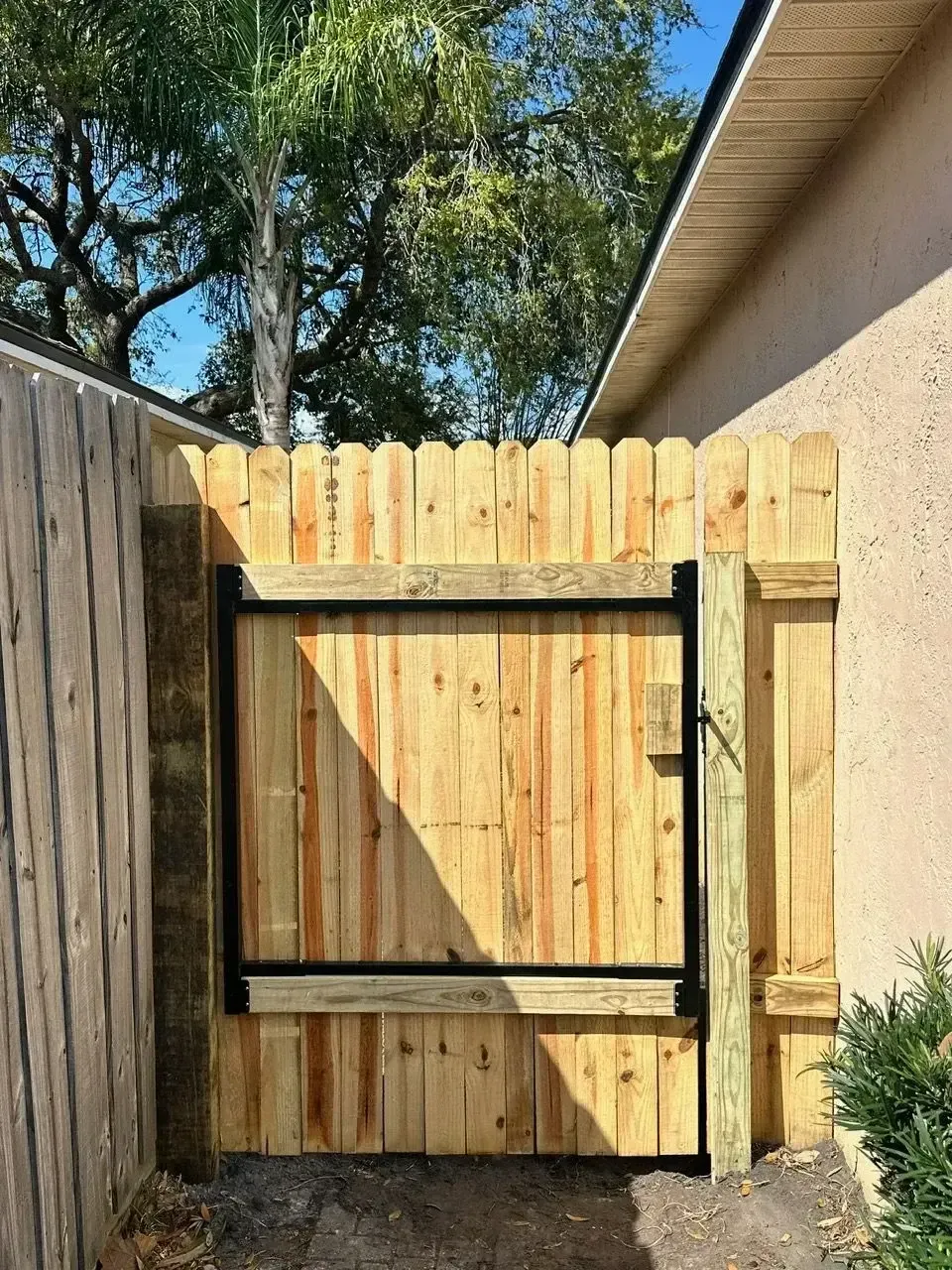
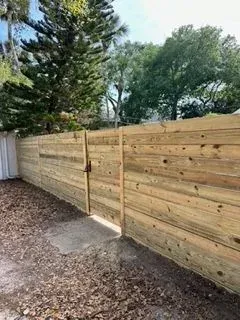
Gate placement affects how the fence works every day. A walk gate may be enough for normal backyard access, while lawn equipment, trailers or service access may require a wider opening. The planned swing, grade, nearby walls or landscaping, and the way people move through the property all matter.
Treat gates as part of the original fence layout rather than an afterthought. It is easier to design the opening, post locations and access path correctly at the beginning than to redesign a finished fence later.
New Fence Installation vs. Complete Fence Replacement
A new installation typically means enclosing an area that is currently open. A complete replacement adds another layer of work: the existing fence has to be evaluated, removed where included in the scope, and the new layout has to account for the condition and location of what was there before.
EcoJax has documented local projects that included removal of an existing fence and installation of a new system. Qualifying complete replacement projects can be scoped as part of the estimate. Small repair-only work should not be assumed to be part of this service unless EcoJax confirms that the specific project fits its current scope.
A Clear Residential Fence Installation Process
Every property is different, but a residential fence project should move through a clear sequence so the homeowner understands what is being built and what may be required before work starts.
Define the goal
Start with the reason for the fence: privacy, pets, children, access control, appearance, view preservation, replacement of an aging fence, or a combination of needs.
Review the property
Evaluate the proposed fence line, grade, access, existing structures and fencing, likely gate locations, and any conditions that could affect the installation.
Select material, layout and gates
Choose the material and configuration that fit the property and the way the yard will be used. Make gate widths and access needs part of this decision.
Confirm approvals and boundary information
Determine whether a survey, HOA approval, permit, historic-district review or other property-specific documentation is required before construction.
Confirm the written scope
The estimate should make the agreed material, layout, gates, removal work and other included items clear before installation begins.
Install, clean up and review the work
Complete the fence according to the agreed scope, remove project debris included in the work, and walk the finished installation with the homeowner.
Jacksonville Fence Planning: Property Lines, Height and Local Rules
Fence requirements are property- and jurisdiction-specific. Jacksonville, Jacksonville Beach, Atlantic Beach, Neptune Beach and nearby counties do not all use the same zoning and permitting process. An HOA can also impose restrictions that are more specific than the local government rules.
Property lines and surveys
The City of Jacksonville states that a fence may be placed on the property line or elsewhere on the property as allowed by the applicable zoning district, but it also warns that a sidewalk or curb does not establish the property line. A survey is the reliable way to identify the boundary before placing a fence where ownership lines matter. See the City of
Jacksonville zoning FAQ.
HOAs, historic districts and special property conditions
If the property is governed by an HOA, review the association’s material, style, height, color and placement rules before ordering a fence. Properties in a locally designated Jacksonville historic district or local landmark can require a Certificate of Appropriateness for fencing or other site work. Rights-of-way, easements, pools and other special conditions can also trigger additional requirements.
How Much Does Residential Fence Installation Cost in Jacksonville?
There is no single honest price-per-foot number that fits every residential fence project. Total cost depends on the material, total linear footage, fence height and style, number and size of gates, removal of existing fencing, grade, access, layout complexity, site conditions, and any permit or approval requirements that affect the work.
A measured, property-specific estimate is more useful than a generic online range because it ties the price to the actual fence line and scope. When comparing quotes, make sure each contractor is pricing the same material, height, gate configuration, removal work and other inclusions. A lower number is not meaningful if important parts of the project are missing from the scope.
Request a project-specific fence estimate so the scope can be based on your property rather than a generic online price.
How Long Does Residential Fence Installation Take?
Project duration depends on the size of the fence, material, number of gates, demolition or removal work, property access, terrain, weather, approval timing and other site conditions. A smaller, straightforward project may move quickly; a long replacement fence with multiple gates and more complex conditions naturally requires more work.
EcoJax’s documented projects show why a single promised timeline would be misleading. An 86-foot Jacksonville Beach vinyl privacy replacement was recorded as a one-day installation, while a roughly 450-foot Atlantic Beach wood replacement with multiple gates was recorded as a three-day installation. Those are past project examples, not guarantees for a future property.
Real EcoJax Residential Fence Projects
First-party project evidence is more useful than stock photography or vague claims. Two documented EcoJax fence projects illustrate different residential needs and scopes:
- Jacksonville Beach vinyl privacy replacement. EcoJax documented an 86-linear-foot white vinyl privacy-fence project in Jacksonville Beach that included removal of an old chain-link fence. The project record shows completion on July 7, 2025, with installation completed in one day. This is a past example only; future timelines depend on the specific project.
- Atlantic Beach wood replacement.
EcoJax documented a roughly 450-linear-foot wood fence replacement in Atlantic Beach with multiple gates. The project record is dated June 22, 2026, and records a three-day installation. Again, this is evidence of a completed project, not a promise that another property will take the same amount of time.
Why Jacksonville Homeowners Choose EcoJax for Fence Projects
- Wood, vinyl and aluminum residential fence installation options.
- More than 10 years of exterior-improvement experience stated across the EcoJax site.
- Licensed and insured status stated on the live EcoJax site.
- Documented local fence projects and real project photography, including verified Jacksonville Beach and Atlantic Beach examples.
- New installation, gate planning, and qualifying complete fence-removal/replacement projects.
- Assistance with applicable permit and HOA submission requirements as part of the project-planning process.
- Free on-site estimates for qualifying fence projects, as currently stated by EcoJax.
- Workmanship and manufacturer warranty availability based on the selected system and project scope.
Residential Fence Installation FAQs
What residential fence materials does EcoJax install?
EcoJax currently presents wood, vinyl and aluminum as its primary residential fence materials. The best choice depends on privacy needs, desired appearance, routine maintenance preferences, sightlines and the property layout.
Can EcoJax remove and replace an existing fence?
Yes, EcoJax has documented qualifying projects that included complete removal of an existing fence and installation of a new system. The removal scope should be confirmed in the project estimate. Small repair-only work should not be assumed to be included unless EcoJax confirms the project fits its current service scope.
Do I need a survey before installing a fence in Jacksonville?
A survey is the safest way to identify the legal property line. The City of Jacksonville specifically warns that a sidewalk or curb does not establish the boundary. Jacksonville Beach’s fence permit materials also require a survey for fence permitting. Requirements can differ by jurisdiction and property.
Does every fence in Jacksonville require the same permit?
No. The consolidated City of Jacksonville and the beach municipalities administer their own zoning and building rules, and special property conditions can add approvals. Jacksonville Beach, for example, states that installation or replacement fences on private property require a permit. Confirm the requirements for the specific address before construction.
Can gates be included in a residential fence project?
Yes. Gate placement, width, swing, grade and equipment-access needs should be planned with the fence rather than added as an afterthought.
What fence is usually best for privacy?
Solid wood and vinyl privacy designs are common choices when blocking views is a primary goal. The right material still depends on appearance, maintenance preferences, property conditions and the design you want.
What fence is best if I want to keep an open view?
Aluminum fencing is often a strong option when the homeowner wants an enclosure or defined boundary without a solid visual barrier. The exact design still needs to fit the property and any applicable safety requirements.
How much will my fence cost?
The useful answer requires a measured scope. Material, footage, height, style, gates, existing-fence removal, terrain, access and site conditions can all change the price. Request a property-specific estimate rather than relying on a generic price-per-foot number.
How long will installation take?
There is no single timeline that fits every fence. Project size, material, gates, removal work, terrain, weather, approvals and access all matter. EcoJax can provide a more realistic expectation after reviewing the actual scope.
If you are planning a new residential fence or a qualifying complete fence replacement in the Jacksonville area, start with the property and the outcome you want. EcoJax can review the layout, material options, gates, existing fencing and other project conditions before finalizing the scope.